In a nation of over 1.4 billion people, the word “rare” can be very misleading. While each specific disease might affect only a small number of people, the total number of people suffering is massive. A report says about 70 million Indians— Despite the government’s 2021 National Policy for Rare Diseases, a serious problem remains for these patients, the biggest challenge isn’t just the lack of a cure; it is the years of wasted time caused by a healthcare system that struggles to identify these conditions until it is too late.
Phase 1: Identifying the Critical Bottleneck
The biggest obstacle for families in India is what experts call the “Diagnostic Odyssey.” This is the long, exhausting journey from the moment a child shows symptoms to the day they finally get a correct name for their condition. Globally, this journey takes an average of seven years. During this time, a typical patient will see eight to ten different doctors and receive two to three wrong diagnoses. This happens because the current path is broken. Most local doctors are not trained to spot the “red flags” of genetic conditions, so they treat the symptoms one by one instead of looking for the root cause. This “Missing Link” turns a medical issue into a logistical nightmare. By viewing the issue as a failure in education and organisation, not as a medical enigma, it turns into a problem that the government and hospitals can resolve.
Phase 2: Quantifying the Cost of Inaction
In the world of rare diseases, time is the most valuable thing a family has. About 80% of these diseases are genetic, and half of them start in early childhood. When a diagnosis is delayed, the “Window of Opportunity” to help the patient often closes. This leads to what is known as the “Irreversibility Factor.” This factor shows that if the disease had been detected at birth, late diagnosis could result in irreversible damage to the brain or body that could have been prevented. The financial cost of waiting is also huge. Families often spend their entire life savings on the wrong treatments during an undiagnosed period. While some rare disease medicines can cost between Rs10 lakh and more than Rs1 crore per year, the “cost of doing nothing” is even higher for the country. The long-term cost of supporting a citizen with a permanent disability is much more expensive than the cost of a simple screening test at birth.
Phase 3: Implementing Multi-Level Interventions
Solving this crisis requires action at three different levels. At the broader level, the government must take charge by implementing the existing policy and improved laws. The current policy offers financial aid of up to Rs50 lakhs for every patient one time. The next important step is to mandate universal newborn screening. Currently, a child’s screening often relies on the hospital where they are born. Establishing this as a national requirement would guarantee that every child receives an equal opportunity. At the meso level, the focus must be on training and infrastructure. There needs to be a clear “Referral Network” so that a local village doctor knows exactly when to send a patient to one of the 15 designated Centres of Excellence. Finally, at the micro level, there is a dire need to support the families. Organisations are now building patient registries so families can connect. When families have a community, they become “expert patients” who can navigate the system together instead of feeling lost and alone.
Phase 4: Scaling Through Public Mobilisation
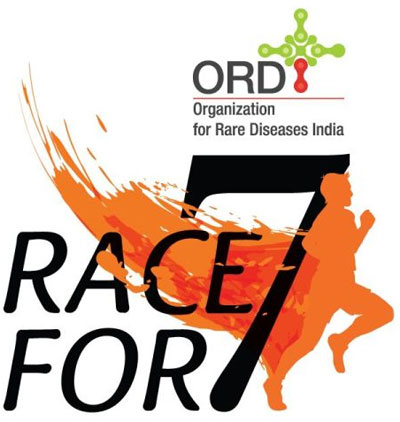
The final part of the plan is turning medical facts into a public movement. Rare diseases should not be a hidden struggle; they need to be a national priority. Campaigns like the “Racefor7″—a 7-kilometer run representing the 7,000 known rare diseases and the 7-year diagnostic delay—help bring this issue into the spotlight. By 2026, the goal is to make sure rare diseases are a key part of the national budget. Public awareness creates the pressure needed to make real changes in the law. When early diagnosis is treated as a basic right, the “Missing Link” can finally be fixed. This will ensure that for 70 million patients, a rare disease is no longer a sentence to a lifetime of uncertainty.
Bridging the “Missing Link” of early diagnosis is the only way to transform the lives of 70 million Indians living with rare diseases. By integrating universal newborn screening and streamlined referral networks, India can replace years of diagnostic uncertainty with a timely path toward care and dignity.
Link for Original Article : https://www.bwhealthcareworld.com/article/rare-diseases-in-india-why-early-diagnosis-is-still-the-biggest-missing-link-590645